San Quentin History
1848-1850 - California Gold Rush swells the population of San Francisco, bringing with it increased crime and crowded jails
Early 1850s - Benjamin Buckelew purchases the Mexican land grant known as Rancho Punta de Quentin for $50,000 in gold coin from Captain Juan Rogers Cooper
April 25, 1851 - "An Act Providing for Securing the State Prison Convicts" is passed, estabilihing California’s official state prison system and instituting a 10-year convict leasing system. In return for housing and feeding prisoners, the contractors were permitted to profit from their labor.
December 1851 - Jack Hays, Sheriff of San Francisco, acquires the ship Waban for use as the first official state prison and sails to Angel Island with roughly 40 incarcerated people. It had been abandoned in the San Francisco Bay by gold seekers
1852 - Buckelew solicits the State Prison Commission to review his land for a new prison site. The commissioners buy 20 acres on the south side of the point for $10,000
April 25, 1851 - "An Act Providing for Securing the State Prison Convicts" is passed, estabilihing California’s official state prison system and instituting a 10-year convict leasing system. In return for housing and feeding prisoners, the contractors were permitted to profit from their labor.
December 1851 - Jack Hays, Sheriff of San Francisco, acquires the ship Waban for use as the first official state prison and sails to Angel Island with roughly 40 incarcerated people. It had been abandoned in the San Francisco Bay by gold seekers
1852 - Buckelew solicits the State Prison Commission to review his land for a new prison site. The commissioners buy 20 acres on the south side of the point for $10,000
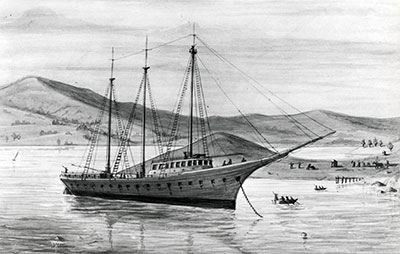
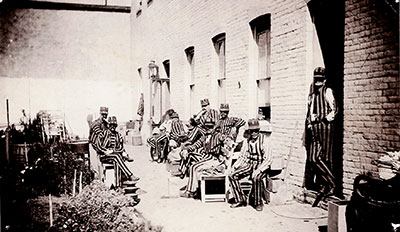
July 14, 1852 - The federal government denies California’s claim on Alcatraz, and the Waban is towed to Point San Quentin. The incarcerated men and women in the Waban sleep aboard ship at night, going ashore during the day so they can build the first San Quentin prison cells using stone quarried nearby
1853 - The first Warden's Residence at San Quentin State Prison is built by convicts
January 1854 - The Spanish Cell Block is completed, named for its Spanish colonial architecture, with 48 windowless cells to house 96 inmates. By the next year the building is overcrowded with more than 300 inmates, men and women
1855 - Prisoners build a wall around the prison using prison-made bricks
1853 - The first Warden's Residence at San Quentin State Prison is built by convicts
January 1854 - The Spanish Cell Block is completed, named for its Spanish colonial architecture, with 48 windowless cells to house 96 inmates. By the next year the building is overcrowded with more than 300 inmates, men and women
1855 - Prisoners build a wall around the prison using prison-made bricks
1858 - The corrupt leasing system of private entities running the prison for profit fails, and the State takes over running the prison and women are segregated from the general population
February 28, 1876 - Fire sweeps through the main workshops, kitchens, mess hall, and quarters designated for approximately 200 prisoners
1880 - Josiah Parker (J.P.) Ames is appointed as the first official state warden and is credited with instituting significant reforms inside the walls, including banning brutal corporal punishments like floggings and whippings
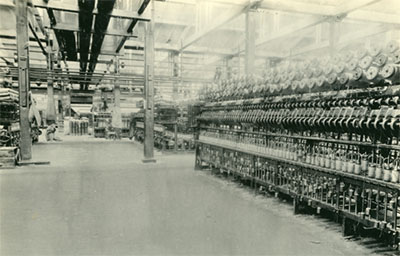
1881 - The State Legislature authorizes the building of a jute mill at the prison, producing burlap cloth, and grain and bean sacks to be shipped worldwide
February 28, 1876 - Fire sweeps through the main workshops, kitchens, mess hall, and quarters designated for approximately 200 prisoners
1880 - Josiah Parker (J.P.) Ames is appointed as the first official state warden and is credited with instituting significant reforms inside the walls, including banning brutal corporal punishments like floggings and whippings
1881 - The State Legislature authorizes the building of a jute mill at the prison, producing burlap cloth, and grain and bean sacks to be shipped worldwide
Nov. 16, 1883 - Notorious stage coach bandit Charles “Black Bart” Boles pleads guilty and is sentenced to four years at San Quentin. He is released in 1888
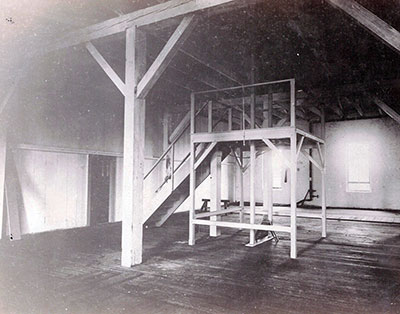
March 3, 1893 - The first state-conducted execution at San Quentin of an inmate named José "Indian Joe" Gabriel, who is hanged for the murder of an elderly farm couple
1903 - California State Legislature launches investigation over allegations of the cruel treatment and severe crowding of people incarcerated in San Quentin
1906 - A school is started for inmates, a requirement until they could pass an 8th grade equivalency exam
1910 - South Block is completed, making it the largest cell house in the world, housing 2,000 inmates
1913 - James A. Johnston is appointed warden. He abolishes corporal punishment, substituting it with solitary confinement, and expands vocational training and medical care. He also switches the striped inmate uniform for a blue pants and shirt outfit still used today
March 3, 1893 - The first state-conducted execution at San Quentin of an inmate named José "Indian Joe" Gabriel, who is hanged for the murder of an elderly farm couple
1903 - California State Legislature launches investigation over allegations of the cruel treatment and severe crowding of people incarcerated in San Quentin
1906 - A school is started for inmates, a requirement until they could pass an 8th grade equivalency exam
1910 - South Block is completed, making it the largest cell house in the world, housing 2,000 inmates
1913 - James A. Johnston is appointed warden. He abolishes corporal punishment, substituting it with solitary confinement, and expands vocational training and medical care. He also switches the striped inmate uniform for a blue pants and shirt outfit still used today
1913 - Dr. Leo Stanley is hired as Chief Surgeon for San Quentin, a position he will hold until 1951
February 22, 1913 - The famous stage actress Sarah Bernhardt performs for inmates in “Une Nuit de Noel,” a one-act play written by her son. Nine inmates have small parts in the play
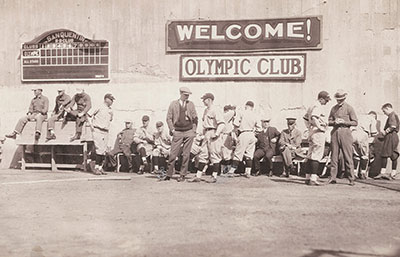
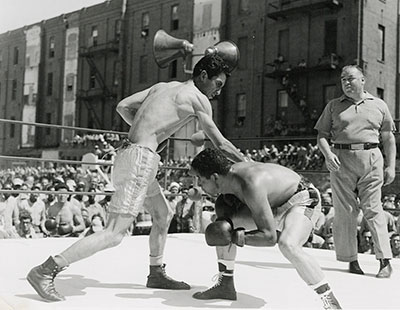
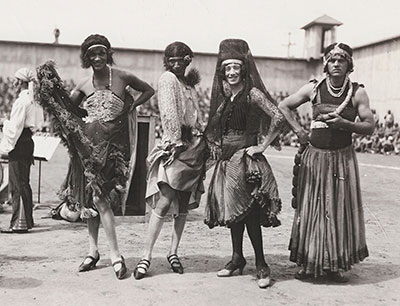
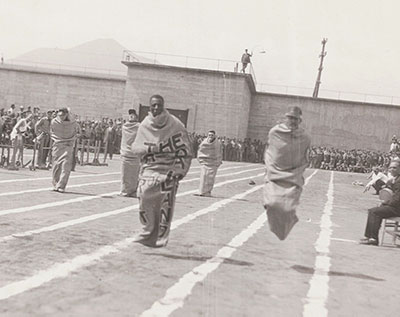
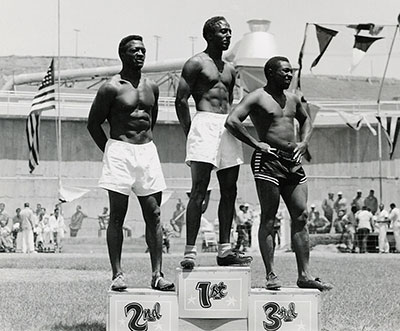
1914 - The first Field Day sponsored by the San Francisco Olympic Club is held, with track and field events, parades, tug-of-war, and beauty and dance contests with inmates in costume
1915 - Warden James A. Johnston establishes the road work camps for minimum security inmates, who do the blasting and rough grading for a number of highways in California
1927 - The Women’s Ward building is constructed, transferring the women inmates from the old second-story “Captain’s Porch.” They remained only until 1933 when the California Institution for Women in Tehachapi opens.
January 16, 1935 - Warden James B. Holohan and parole board members are attacked by four inmates in his residence. They escape in a car with members of the board and two guards, but are captured after a lengthy car chase
1938 - The gas chamber is installed to replace hanging as a means of execution.
1914 - The first Field Day sponsored by the San Francisco Olympic Club is held, with track and field events, parades, tug-of-war, and beauty and dance contests with inmates in costume
1915 - Warden James A. Johnston establishes the road work camps for minimum security inmates, who do the blasting and rough grading for a number of highways in California
1927 - The Women’s Ward building is constructed, transferring the women inmates from the old second-story “Captain’s Porch.” They remained only until 1933 when the California Institution for Women in Tehachapi opens.
January 16, 1935 - Warden James B. Holohan and parole board members are attacked by four inmates in his residence. They escape in a car with members of the board and two guards, but are captured after a lengthy car chase
1938 - The gas chamber is installed to replace hanging as a means of execution.
July 13, 1940 - Warden Court Smith resigns after a closed-door meeting with the State Board of Prison Directors, and Clinton T. Duffy is appointed interim warden and slated for a 30-day assignment. He would remain in that position until 1952, bringing in sweeping changes: reestablishing the prison newspaper, ordering racial integration in the dining hall, enlisting the prison population in the war effort, establishes numerous programs of academic and vocational training, and believes in rehabilitation rather than punishment
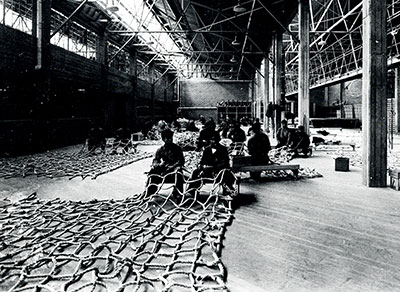
1942 - Following the attack on Pearl Harbor, Warden Duffy enlists inmates to provide 10,000 man hours a day in war production: Red Cross first aid kits, metal splints, jute bags for sandbags and jute for camouflage, sirens for air raid alarms, and more
April 8, 1943 - Eleanor Roosevelt visits San Quentin to tour the prison's war work efforts, thanking inmates for manufacturing essential wartime items such as cargo nets and slings
April 19, 1951 - A massive fire destroys the old Jute Mill
1942 - Following the attack on Pearl Harbor, Warden Duffy enlists inmates to provide 10,000 man hours a day in war production: Red Cross first aid kits, metal splints, jute bags for sandbags and jute for camouflage, sirens for air raid alarms, and more
April 8, 1943 - Eleanor Roosevelt visits San Quentin to tour the prison's war work efforts, thanking inmates for manufacturing essential wartime items such as cargo nets and slings
April 19, 1951 - A massive fire destroys the old Jute Mill
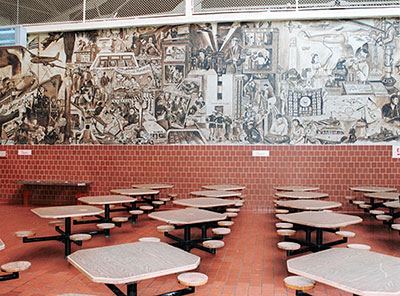
1953 - After winning a prison art contest, inmate Alfredo Santos is assigned to paint the blank walls of the mess hall, resulting in a collection of 100-foot-long murals
February 24, 1969 - Country music superstar Johnny Cash performs for inmates, famously captured on film and on the multi-platinum At San Quentin album
March 1959 - The old Spanish Cell Blocks are torn down
August 21, 1971 - Inmate George Jackson uses a smuggled handgun to attempt an escape, leading to a bloody uprising that left three correctional officers and three inmates dead before Jackson was shot to death by guards
1999 - Jeanne Woodford is appointed as the first female warden at San Quentin, advocates for rehabilitation, and significantly expanded the prison's educational and vocational offerings
February 24, 1969 - Country music superstar Johnny Cash performs for inmates, famously captured on film and on the multi-platinum At San Quentin album
March 1959 - The old Spanish Cell Blocks are torn down
August 21, 1971 - Inmate George Jackson uses a smuggled handgun to attempt an escape, leading to a bloody uprising that left three correctional officers and three inmates dead before Jackson was shot to death by guards
1999 - Jeanne Woodford is appointed as the first female warden at San Quentin, advocates for rehabilitation, and significantly expanded the prison's educational and vocational offerings
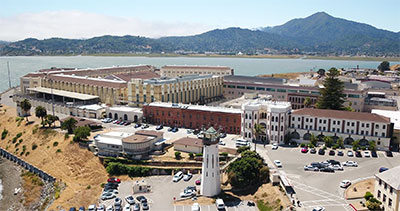
March 2023 - Calif. Gov. Gavin Newsom introduces the “California Model” that shifts San Quentin from a maximum security facility to a center for education and training within the prison system
March 2026 - The San Quentin Learning Center is completed, to support rehabilitation and reentry for inmates
March 2026 - The San Quentin Learning Center is completed, to support rehabilitation and reentry for inmates